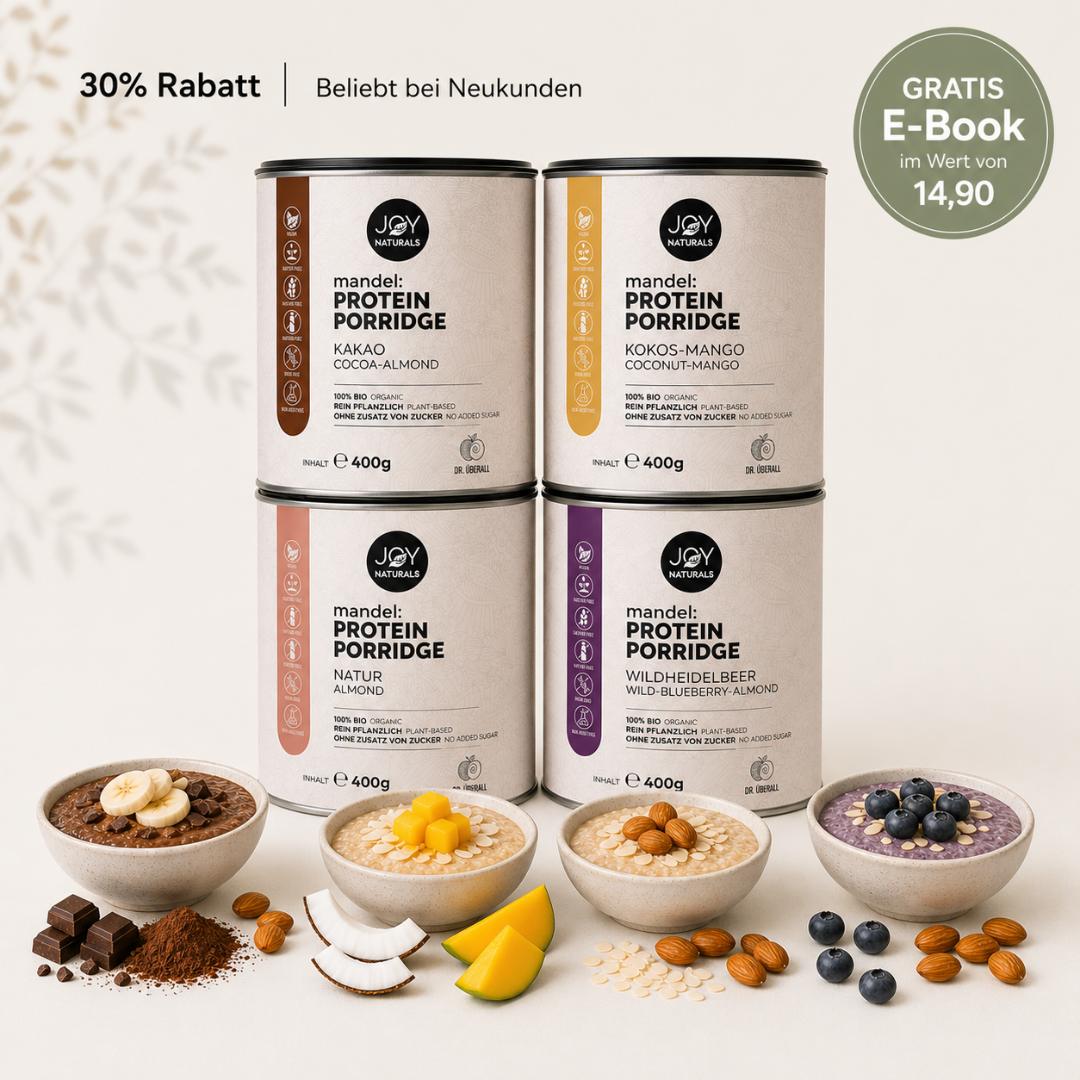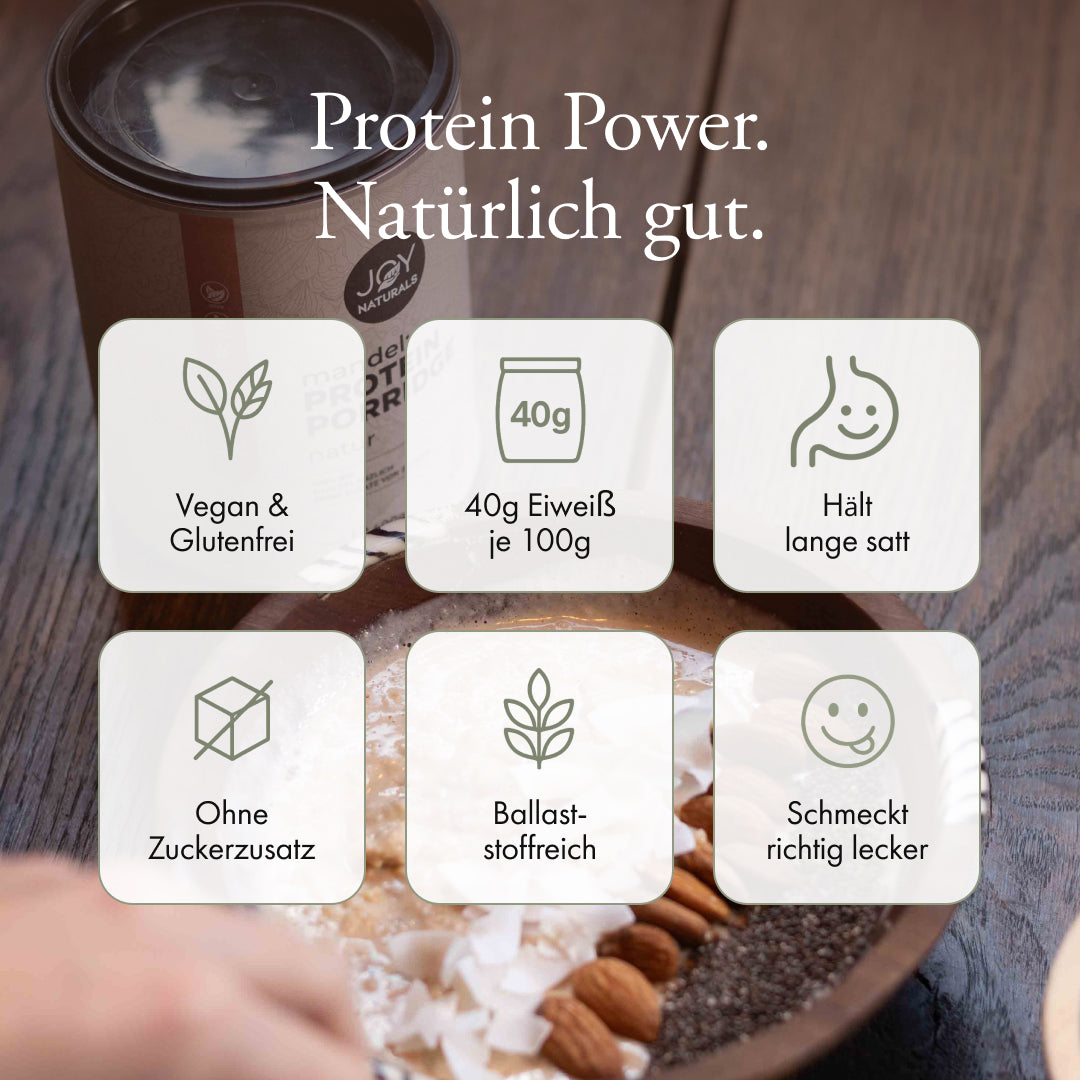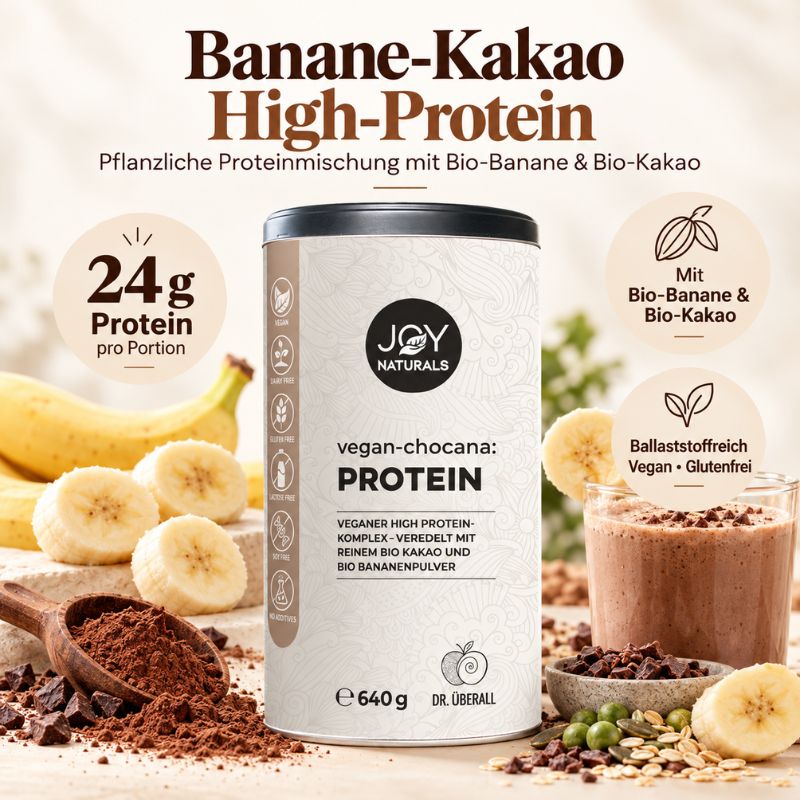

A shake is meant to strengthen you after training or make your morning easier - not taste artificially sweet and come with a long list of ingredients. Vegan protein powder without sweeteners is therefore a conscious choice for many: You decide how sweet your drink will be, and you focus on what really matters - high-quality plant-based protein.
Especially with vegan protein powders, a closer look is worth it. Because "no added sugar" does not automatically mean free of sweeteners. Some products contain stevia, sucralose, acesulfame K or intense natural flavors that mask the inherent taste of the proteins. If you are looking for a purist routine, a clear recipe, traceable raw materials and a taste that fits well into your everyday life matter.
Why vegan protein powder without sweeteners can be a good idea
Sweeteners are not a problem for everyone. Some like them, others tolerate them well and appreciate the consistently sweet taste. But there are good reasons to consciously avoid them. Intense sweetness can lead to a neutral shake tasting unusually bland. Those who want to re-accustom their own sense of taste to natural foods often benefit from a less sweet base.
A reduced recipe can also be helpful for sensitive digestion. Discomfort is not automatically caused by sweeteners - it can also be related to the protein source, the portion, the preparation or other ingredients. Nevertheless, a product without sweeteners and unnecessary fillers is a sensible starting point if you want to find out what really suits you.
Plus, there is the practical advantage: A neutral powder not only fits in shakes. You can stir it into porridge, yogurt alternatives, soups, pancakes or savory spreads. This way, protein does not become a uniform taste, but a flexible component of your diet.
What is in a good vegan protein powder
The most important question is not: How sweet does it taste? But: Which protein sources does it provide and how transparent is the recipe? Plant proteins differ in amino acid profile, consistency and taste. Especially in a vegan diet, a clever combination is often more convincing than a single protein.
Pea, rice and hemp: different strengths
Pea protein provides particularly high levels of lysine, an essential amino acid that is less prevalent in some grain proteins. Rice protein complements the profile with sulfur-containing amino acids and usually has a mild to slightly grainy taste. The combination of pea and rice is therefore considered a popular, everyday-suitable base for vegan protein mixtures.
Hemp protein additionally brings fiber and a nutty inherent taste. It is less processed, but usually also has a lower protein content than isolated proteins. Pumpkin seed, sunflower or almond protein can enrich a recipe in taste and nutritional value. Which mixture is best depends on your goal: For a high-protein shake after sports, concentrated mixtures are practical. For a filling breakfast, the powder may also contain more natural accompanying substances.
A complete amino acid profile is no reason to plan every meal complicatedly. What matters is your diet throughout the day. Those who diversely combine legumes, whole grains, nuts, seeds and plant-based protein sources already create a good foundation. Protein powder complements this base where it should be quick and uncomplicated.
Fewer ingredients, more clarity
Turn the package around and read the ingredient list from back to front? Even easier: It should be short and understandable anyway. Ideally, you find one or more plant-based protein sources, possibly natural accompanying substances such as fiber or finely ground seeds - and not much else.
Pay special attention to terms such as sweeteners, sweetener, steviol glycosides, sucralose or acesulfame K. Sugar alcohols such as erythritol can also cause an unpleasant stomach feeling in some people in larger quantities. They are not automatically bad, but do not fit with a protein powder without sweeteners.
Organic quality can additionally provide orientation, especially if a controlled selection of raw materials is important to you. It does not replace a transparent recipe, but sensibly complements the quality claim. Laboratory-tested products and production under clear quality standards create further trust - especially with a food that you use regularly.
How to recognize hidden sweetness in the powder
"Nature" on the front is not a protected quality promise. A powder can be plant-based, vegan or organic and still taste strongly sweetened. Therefore, always check the complete ingredient list and not just the big claims on the packaging.
Flavors also deserve a second look. A natural flavor is not the same as a sweetener. Nevertheless, an intense vanilla or chocolate flavor can significantly enhance the impression of sweetness. If you really want to start neutral, an unflavored variant is usually the most honest choice. Depending on the protein base, it tastes slightly earthy, nutty or grainy - and that is exactly how it should be.
From the nutritional table you can see how much sugar is naturally contained. With pure plant protein, small amounts are possible, for example through the raw materials themselves. This is something different from added sugar. The ingredient list remains crucial: There you see what was actually added.
Application: How your shake becomes really good
A neutral protein powder does not need a complicated presentation. For starters, 20 to 30 grams of powder are enough, depending on the product and personal protein requirement, with 250 to 350 milliliters of water or unsweetened plant drink. A shaker works for on the go, a blender makes the consistency particularly creamy with frozen fruit or oats.
If you like natural sweetness, choose it yourself: Half a banana, berries, grated apple, dates or some cinnamon change the taste without your powder being permanently fixed to it. Cocoa, vanilla, coffee or a spoon of nut butter bring depth and turn a simple shake into a little ritual.
For a high-protein breakfast, you can stir the powder into a warm porridge base. Take the pot briefly off the heat so that no lumps are formed. It also works well in yogurt alternatives, smoothies or pancake batter. For savory dishes, restraint is required: A small amount of neutral protein fits into creamy vegetable soups, for example, but should not dominate the inherent taste.
How much protein do you really need?
Your requirement depends on body weight, activity, age and your personal goal. Those who are less active need less than people who regularly do strength training or are in an intensive training phase. Protein powder is not a replacement for full-value meals. It provides concentrated protein, but not automatically the variety of micronutrients, complex carbohydrates and phytonutrients that make up a balanced diet.
It is particularly useful in those moments when everyday life otherwise wins: after training, between two appointments, on a trip or when breakfast has to be quick. If your main meals are already high in protein, a smaller portion may also suffice. Listen to your feeling of fullness, increase the amount slowly if necessary and pay attention to sufficient fluid.
With known kidney or metabolic diseases, you should have an increased protein intake individually medically clarified. This also applies if you regularly take medication or have special dietary needs.
A conscious protein routine that suits you
A vegan protein powder without sweeteners does not convince because it has as little taste as possible. It convinces when it gives you freedom: freedom in preparation, in sweetness and in your daily rituals. A clear organic recipe without artificial flavors, sweeteners and fillers fits this requirement particularly well - for example when quality, origin and an honest ingredient list belong together for you.
Whether in a quick morning shake, in protein porridge or as a supplement after sports: Choose a powder that adapts to your life, instead of dictating your taste. Natural. Concentrated. And exactly so simple that you like to maintain your routine.