
When to take probiotics? The best time for your gut routine
The coffee smells wonderful, breakfast is ready – and many people ask the same question: When should you take probiotics? Before a meal, during a meal, or on an empty stomach? In fact, there is no one-size-fits-all answer. The optimal time always depends on the specific product and its formulation.
However, something else is much more important than the exact time: Consistency. Because the best conditions are created when probiotics become a simple, daily part of your personal routine.
Why the time of intake matters at all
Probiotics contain live microorganisms that, when taken in sufficient quantities, can support the gut flora. To reach their destination, they must first pass through the stomach. The environment there is very acidic, which can affect some of the bacteria.
That is why manufacturers focus intensively on how to protect the sensitive cultures as effectively as possible. Some products use special capsules, while others use innovative technologies such as microencapsulated bacterial strains.
Nevertheless, remember: The instructions on the packaging always take precedence, as they are tailored to the specific formulation.
Probiotics in the morning or evening?
Many people prefer taking them in the morning. There is a simple reason for this: morning routines are often firmly established.
If you already eat breakfast, you can easily combine your probiotic with this meal. This reduces the likelihood of forgetting to take it.
Others feel more comfortable taking them at lunchtime or in the evening. That can be perfectly fine too.
The best time of day is therefore always the one that consistently fits your daily life.
With a meal or on an empty stomach?
For a long time, it was often recommended to take probiotics on an empty stomach. Today, however, we know that this statement is too general.
Depending on the bacterial strains and technology used, taking them before a meal or with food can both be beneficial.
If there is no specific manufacturer recommendation, many people choose to take them just before or during a small meal. Food can temporarily buffer stomach acid, thereby creating more favorable conditions for the microorganisms.
For example, the following are well-suited:
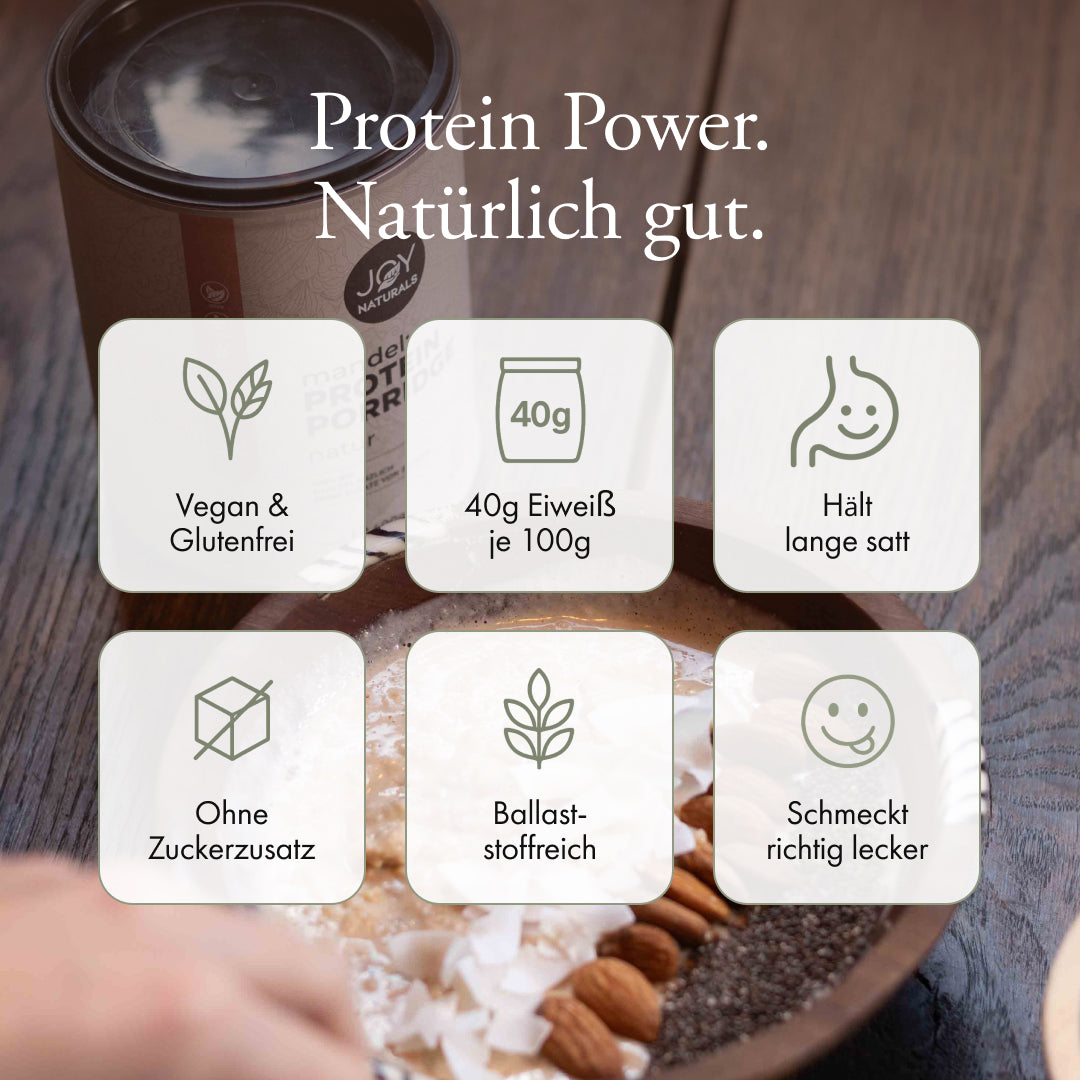
- Oat or almond porridge
- Natural yogurt or plant-based alternatives
- a light breakfast
- a small lunch
You should generally avoid taking probiotics with very hot drinks or foods, as high temperatures can affect sensitive cultures. A glass of room-temperature water is usually the easiest choice.
Modern solutions: Incorporate probiotics directly into breakfast
Not everyone wants to swallow a capsule every day. That is precisely why modern powder formulations are becoming increasingly important.
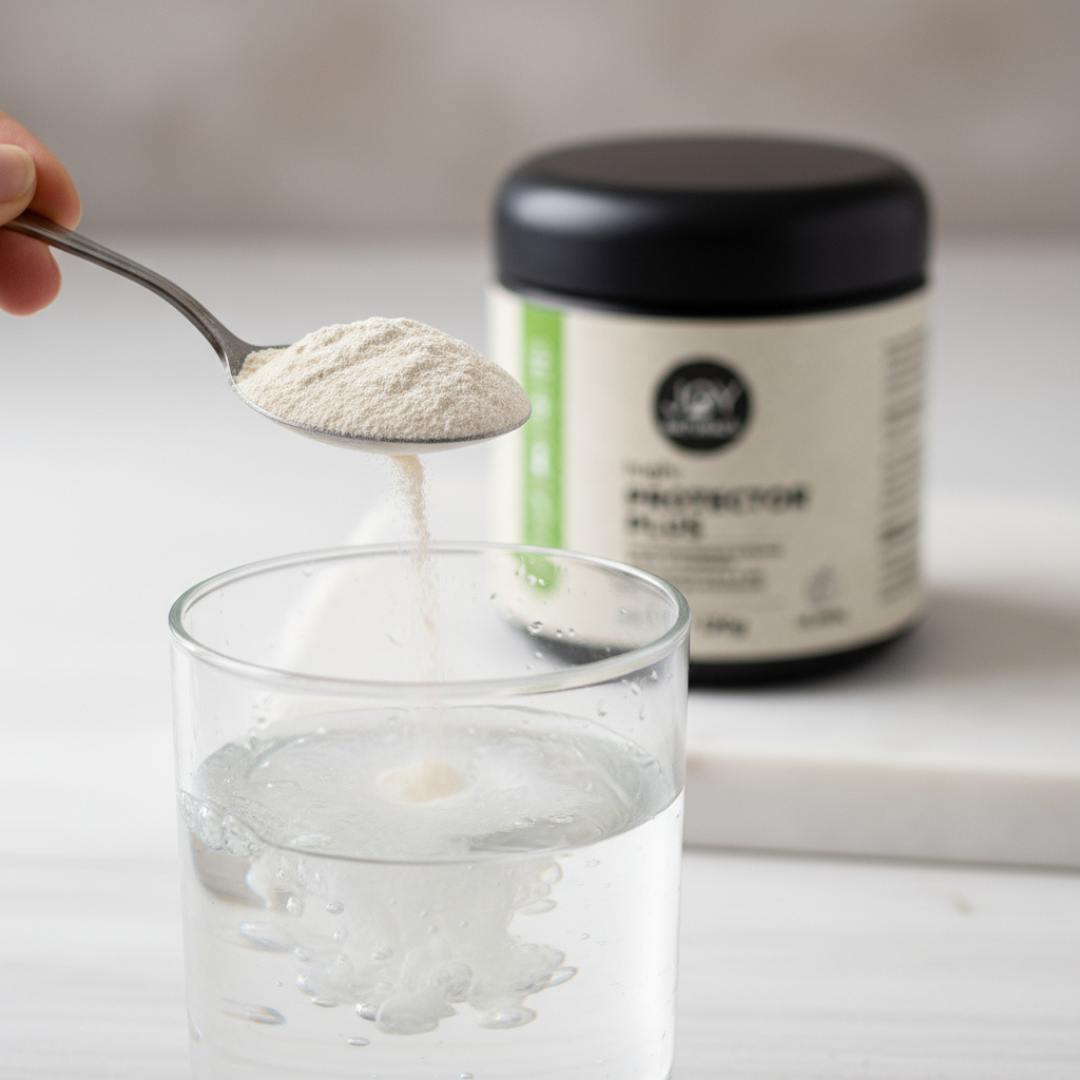
For example, high:PROTECTOR PLUS offers a practical option. The powder contains microencapsulated bacterial strains that are specially protected and particularly easy to incorporate into your daily routine.
Instead of taking a capsule, the powder can simply be stirred into a pre-cooled breakfast, such as:
- Porridge
- Overnight oats
- Plant-based yogurt
- Smoothies
- Muesli
Microencapsulation helps protect the sensitive cultures during storage and passage through the stomach. At the same time, the product can be incorporated into your morning diet almost unnoticed – without any extra effort.
This creates a particularly simple routine for people who already eat porridge or muesli every morning.
Why routines are more important than perfection
The gut benefits not from individual measures, but from consistency.
Whether in the morning or at lunchtime, capsule or powder – the important thing is that you maintain your gut routine consistently.
It is helpful to link the intake to an existing habit:
- right after breakfast
- after brushing your teeth
- with the first glass of water of the day
- always with lunch
The less you have to think about it, the easier it will be to maintain the routine in the long term.
Probiotics while taking antibiotics
After a course of antibiotics, many people want to consciously support their gut flora.
As a general rule:
There should usually be a gap of two to three hours between taking antibiotics and bacterial probiotics.
This prevents the antibiotic from immediately affecting the cultures you have taken.
How long after that it is beneficial to take a probiotic depends on the specific product and your personal situation. The manufacturer's information or the recommendation of your doctor or pharmacist always takes precedence.
What role do bacterial strains play?
Not all probiotics are the same.
The term "probiotics" encompasses numerous different bacterial strains, each with its own properties.
Commonly used examples include:
- Lactobacillus strains
- Bifidobacterium strains
Some preparations combine several strains, while others deliberately use individual, scientifically studied cultures.
In addition to the number of colony-forming units (CFUs), it is especially worth looking at the quality:
- Are the strains clearly stated?
- Is there a clear dosage?
- Are there storage instructions?
- Is modern protective technology used?
A high number of billions alone does not tell you anything about the actual quality of a product.
Diet remains the most important foundation
Even the best probiotic cannot replace a balanced diet.
A diverse microbiome benefits especially from:
- High-fiber vegetables
- Whole grains
- Legumes
- Oats
- Nuts
- Sprouted seeds
- Fruit
- Fermented foods such as sauerkraut or kimchi (depending on individual tolerance)
Sufficient exercise, enough fluids, and restful sleep also support a healthy gut routine.
How can you tell if your routine is working?
Probiotics are not an instant solution.
Changes usually develop only after several weeks of consistent use. That is why it is worth not judging your digestion every day, but rather observing your personal well-being over a longer period.
If you do not tolerate a product well on an empty stomach, taking it with a meal may be more pleasant. If you regularly forget it in the evening, simply move it to the morning.
The best time to take it is ultimately always the one that consistently fits your daily life.
Conclusion
If you want to support your gut flora, you do not have to find the perfect time. What is much more important is a reliable daily routine.
Whether classically as a capsule or particularly simply as a powder – modern solutions such as high:PROTECTOR PLUS with microencapsulated bacterial strains can be easily stirred into a breakfast porridge, muesli, or plant-based yogurt and make daily intake particularly suitable for everyday life.
In combination with a varied, high-fiber diet, sufficient exercise, and a healthy lifestyle, this creates a sustainable foundation for consciously supporting gut health – day after day.