
You're tired – and yet you can't sleep properly?
Summer is actually the time when we should feel most alive. The days are long, vacation is just around the corner or has just begun, we spend more time outdoors and soak up the sun.
That makes it all the more frustrating when the nights become restless at just such a time.
You toss and turn in bed, keep waking up, look at the clock at three in the morning and wonder why you simply can't sleep through the night despite being tired. In the morning you feel exhausted, in the afternoon you lack concentration and even small tasks suddenly seem strenuous.
Most people immediately blame the heat.
And yes – warm bedrooms can make sleep difficult. But surprisingly, the temperature is often just the tip of the iceberg.
Because while we want to sleep, our body sometimes works at full speed. Digestion, blood sugar, fluid balance, minerals and even our evening habits can determine whether we sleep deeply or crawl from one waking phase to the next night after night.
The good news: Many of these factors can be targeted – often with small changes that make themselves noticeable surprisingly quickly.
Why we often sleep poorly in summer
Sleep is not a state we simply "switch" into. It is the result of many finely tuned processes.
So that we can fall asleep, our body begins preparations hours in advance:
- The core body temperature drops slightly.
- Stress hormones decrease.
- The sleep hormone melatonin increases.
- Heart rate and metabolism gradually slow down.
In summer, these exact processes are more easily thrown out of balance.
Not just because of the heat.
Long, bright evenings, later mealtimes, barbecues, alcohol, ice cream, cocktails and irregular daily routines also put more strain on our body than many realize.
That is why many people not only feel sleep-deprived in the morning – but completely drained.
The most common cause, which hardly anyone talks about: The metabolism doesn't sleep with us
Many people believe they sleep poorly even though they are actually tired enough.
But at night, the following often happens:
The body tries to regenerate.
At the same time, however, it still has to digest a large meal, break down alcohol or compensate for strong blood sugar fluctuations.
This means:
While your brain wants to sleep, your metabolism is working at full speed.
This internal "night shift" costs energy.
Awake between 2 and 4 a.m.? Your blood sugar could be to blame
Do you know this?
You fall asleep without any problems.
But suddenly you are wide awake.
Maybe around two o'clock.
Maybe around four o'clock.
For no apparent reason.
Many immediately think of stress.
But in fact, blood sugar can also be involved.
Especially after:
- Ice cream
- Sweets
- Cake
- Soft drinks
- White bread
- Pizza
- Large portions of pasta
- Sweet cocktails
blood sugar initially rises sharply.
The body reacts with a higher insulin release.
When blood sugar then drops rapidly again, the body tries to counteract it.
Adrenaline and cortisol are released, among others.
These hormones are actually responsible for waking us up in the morning.
In the middle of the night, however, they can cause exactly the opposite of what we want:
- Sudden awakening
- Heart palpitations
- Inner restlessness
- Sweating
- Racing thoughts
- The feeling of being wide awake
Many sufferers suspect psychological stress – although their metabolism is actually sounding the alarm.
Why late meals often worsen sleep unnoticed
Especially in summer, we eat later.
We sit outside longer.
The barbecue party doesn't start until eight.
Dessert is served around ten.
Shortly after, you end up in bed.
But for the body, this is hard work.
Digestion requires:
- Energy
- Oxygen
- Blood flow
- Metabolic activity
Particularly burdensome are:
- Very fatty foods
- Large portions of meat
- Heavily spiced dishes
- Fast food
- Very large portions
The body remains active longer.
The body temperature drops more slowly.
Deep sleep phases may be shorter.
Tip:
Plan your last large meal as early as possible two to three hours before going to bed.
If you get hungry later, a small snack is often enough.
For example:
- Natural yogurt
- A few nuts
- A small handful of berries
- Vegetable sticks with hummus
Alcohol makes you sleepy – but often prevents restful sleep
A glass of wine on the terrace.
A cool beer at the barbecue.
An Aperol Spritz at sunset.
For many, this is simply part of summer.
Alcohol can make it easier to fall asleep.
But actual sleep often suffers as a result.
During the night, alcohol changes the sleep architecture:
- Less deep sleep
- More waking phases
- More frequent awakenings
- Increased heart rate
- Louder snoring
- More trips to the bathroom
That is why many people feel exhausted despite getting enough sleep.
Just a few alcohol-free evenings a week can make a noticeable difference.
Sweating means more than just fluid loss
On hot days, the body loses not only fluid through sweat.
Minerals are also lost.
Particularly important are:
Magnesium
Magnesium contributes to the normal function of muscles and the nervous system and supports energy metabolism.
Natural sources are:
- Pumpkin seeds
- Almonds
- Oatmeal
- Cashews
- Legumes
Potassium
Potassium supports, among other things, normal muscle function.
Particularly rich in it are:
- Potatoes
- Bananas
- Apricots
- Tomatoes
- Spinach
- Avocados
Especially on very hot days, it is worth incorporating these foods into your diet regularly.
Drinking too much in the evening can also disrupt sleep
Many people only realize in the evening that they have hardly drunk anything during the day.
Then they quickly make up for it with another liter or two of water.
The result:
Several trips to the bathroom during the night.
That is why:
Don't drink as much as possible at once.
But rather as regularly as possible.
A simple trick:
Set out a large carafe of water in the morning and distribute the drinking amount evenly throughout the day.
The underestimated role of light
Summer means long evenings.
But our brain is strongly oriented by daylight.
If it stays bright until late and smartphones, tablets or televisions are added to the mix, natural melatonin production is delayed.
Falling asleep becomes more difficult.
A small help with a big effect:
About an hour before going to bed:
- Dim the lights
- Put away your smartphone if possible
- Read or listen to music instead
- Use warm light sources
Many people report feeling more relaxed when falling asleep after just a few days.
The perfect evening routine doesn't have to last an hour
Many people believe they need complicated sleep rituals.
But ten to fifteen minutes are often enough.
For example:
- Ventilate the room thoroughly.
- Prepare your clothes for the next day.
- Put your phone in airplane mode.
- A few gentle stretches.
- Write down three things that went well today.
- Breathe slowly and consciously.
This signals to the nervous system:
The day is over. Now peace can settle in.
What is particularly sleep-friendly in the evening
Ideal are light meals with:
- Vegetables
- High-quality protein sources
- Fiber
- Complex carbohydrates
- Healthy fats
For example:
🥗 Large salad with chickpeas
🥣 Vegetable bowl with quinoa
🍳 Omelet with vegetables
🥔 Baked potatoes with herb quark
🥒 Cucumber, tomato and lentil salad
This combination usually keeps blood sugar more stable than highly sugary or very fatty meals.
10 practical tips for better summer nights
1. Keep the bedroom as cool as possible, ideally below 20 °C.
2. Don't eat a large meal two to three hours before going to bed.
3. Don't use alcohol as a sleep aid.
4. Reduce sugary snacks late in the evening.
5. Drink enough throughout the day instead of only in the evening.
6. Regularly incorporate magnesium- and potassium-rich foods.
7. Reduce screens and bright light in the evening.
8. Go to bed at about the same time every day.
9. Keep the bedroom as dark as possible.
10. Don't constantly look at the clock at night – this often only increases the pressure to fall asleep.
Why sleep problems often reinforce each other
Maybe you know this thought:
"I absolutely have to sleep now. I have a stressful day tomorrow."
The more often this thought appears, the more active our brain becomes.
The body releases stress hormones again.
The result:
You desperately try to fall asleep – and that is often exactly what makes it harder.
Sleep cannot be forced.
It is best created when the body and nervous system receive the signal that there is no danger and no further performance is expected.
That is why regular routines often have a more lasting effect than constantly switching between sleep teas, supplements or other short-term solutions.
Restful sleep often begins long before going to bed
If you sleep poorly in summer, it is probably not just because of the heat.
Often several factors come together: an active metabolism, late meals, blood sugar fluctuations, alcohol, dehydration or a lack of evening routines.
The good news is that even small changes can make a big difference. By relieving the body in the evening, drinking regularly, paying attention to balanced meals and giving the nervous system time to wind down, you often create the best conditions for quieter nights and a more rested start to the next day.
A light summer salad or vegetable bowl can be complemented with sprouted seeds, for example. They provide fiber, plant nutrients and add more flavor and bite – an uncomplicated way to round off light evening dishes in a balanced way without unnecessarily weighing them down.
Small changes can make a difference
When nights become restless in summer, it is often not due to a single trigger. Frequently, it is several factors coming together: warm temperatures, late meals, blood sugar fluctuations, alcohol, an unbalanced fluid and mineral balance or a lack of moments to switch off.
The good news: Even small changes can noticeably help the body and nervous system relax better in the evening. A light dinner, sufficient fluid spread throughout the day, regular bedtimes and conscious moments of relaxation often create the best conditions for a more restful night.
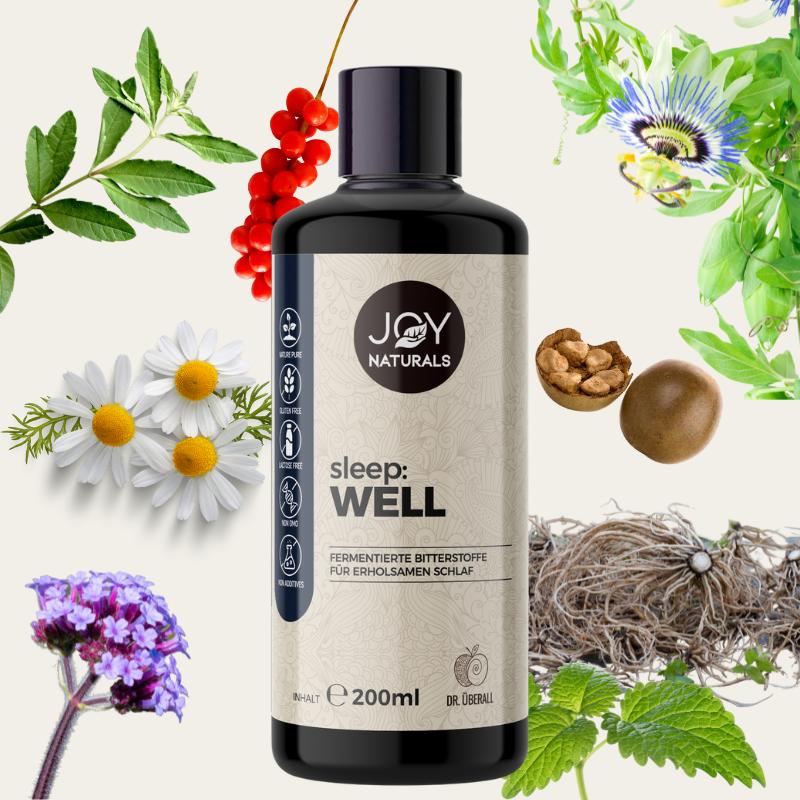
Some people supplement their evening routine with selected plant-based ingredients. Herbs such as passionflower, valerian, lemon balm, and chamomile have been used for centuries to help consciously unwind at the end of the day and promote inner calm.
Those who want to easily incorporate this approach into their daily lives can turn to specially developed combinations of fermented herbal extracts and probiotic cultures. Our sleep combines passionflower, valerian, lemon balm, chamomile, lemon verbena, lemon balm mint, schisandra, and monk’s pepper, among others, in a fermented formulation. The blend is complemented by probiotic cultures that support the fermentation process and round out the concept.
Whether as a small evening ritual with a glass of water or a cup of warm herbal tea, many people find such mindful routines to be a pleasant transition from the often hectic pace of everyday life to a restful night.
After all, a good night’s sleep usually doesn’t start when you get into bed, but with the choices you make several hours beforehand.