
We live in a world where food is available at all times – and yet many people feel tired, unbalanced, or constantly hungry.
The reason often lies not in too much, but in too little of what really matters:
real, deep-acting nutrients.
Maybe right now is the moment to change your focus:
Away from restriction.
Towards conscious nourishment.
Because your body doesn't count calories – it looks for building blocks.
Why being "full" doesn't mean you are nourished
Many modern foods are:
- highly processed
- energy-dense
- but nutrient-poor
This leads to a paradoxical state:
👉 You eat enough – but your body doesn't get what it needs.
Typical signs of this:
- constant snacking
- cravings for sweets or salty foods
- energy slumps after eating
- diffuse dissatisfaction
Your body isn't trying to "disturb" you –
it is trying to nourish you.
Nutrient density – a new perspective on nutrition

Instead of asking:
👉 "How much am I eating?"
ask the crucial question:
👉 "How much is really in it?"
Nutrient density means:
A food provides you with as many as possible:
- vitamins
- minerals
- enzymes
- secondary plant compounds
… while maintaining natural, unprocessed quality.
The silent powerhouses in everyday life
Some of the most effective foods are often inconspicuous – but extremely powerful:
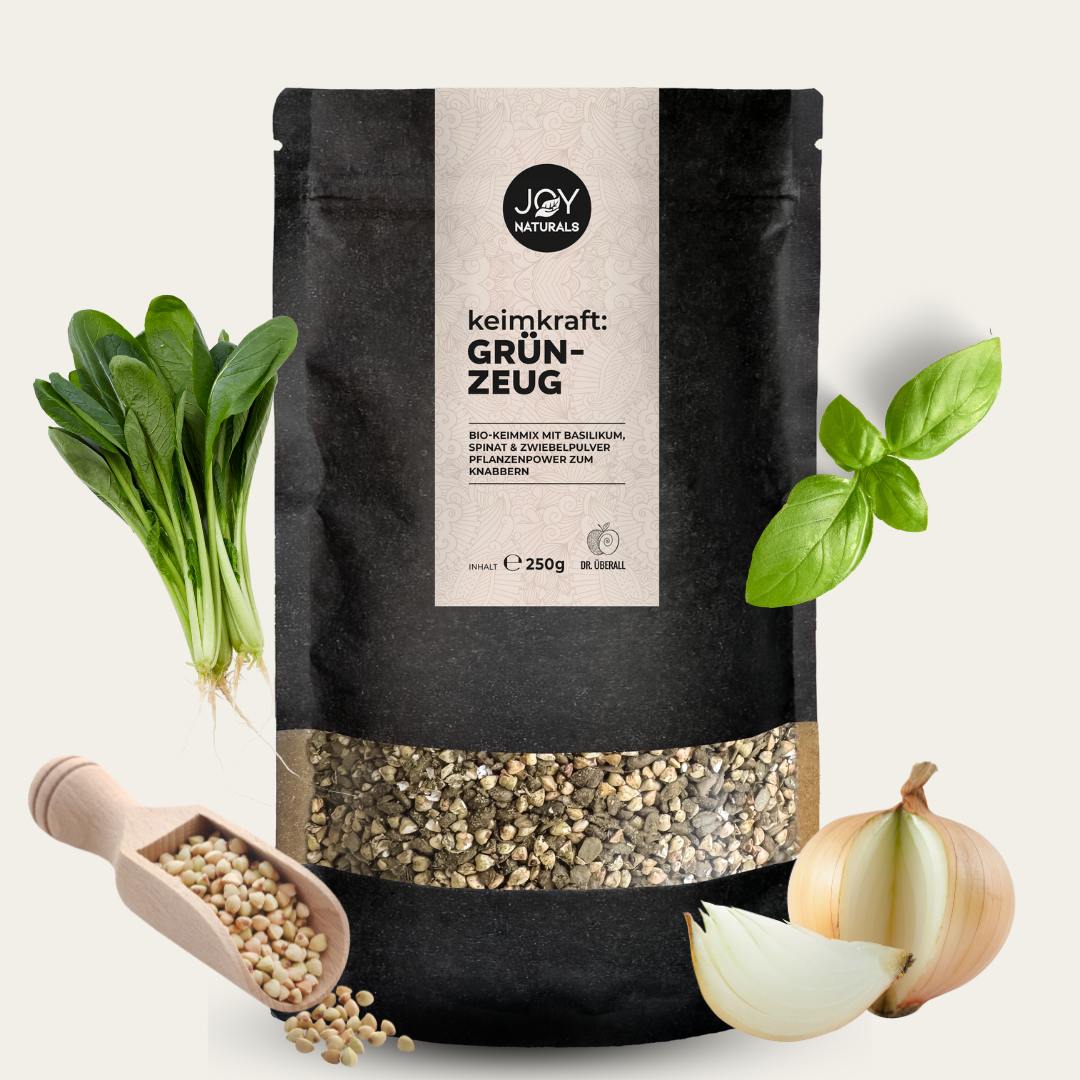
Sprouts & microgreens
- contain many times more nutrients compared to the original plant
- especially rich in enzymes & plant compounds
- perfect as a daily "upgrade"
Bitter compounds (almost forgotten – but essential)
- activate digestion & metabolism
- support the liver & bile
- found in: arugula, chicory, herbs, sprouts
Fermented foods
- strengthen your microbiome
- improve nutrient absorption
- e.g. sauerkraut, kimchi, fermented beverages
Herbs & plant compound complexes
- do not work in isolation, but in combination
- often highly concentrated and bioavailable
Learn to understand cravings
A change in perspective that changes a lot:
👉 Cravings are often not a lack of discipline
👉 but a lack of nutrients
When your body gets what it needs:
- your appetite will become calmer
- your decisions clearer
- your eating habits more natural
Back to intuition – step by step
Nutrient density brings you back to a state where your body "speaks" again – and you can understand it.
Pay attention to:
- how you really feel (fresh, warm, light, nourishing)
- how you feel after eating (clear vs. heavy)
- whether you get energy or lose it
This is the beginning of true body intelligence.
Everyday tips: How to easily increase your nutrient density
Here it gets concrete – without pressure, without perfection:
1. Think in "upgrades", not in restriction
Instead of cutting things out, consciously add:
- sprouts on every dish
- fresh herbs
- high-quality oils
- fermented components
Small additions, big impact
2. Build every meal like a "nutrient field"
A simple guide:
- something fresh (vegetables, herbs)
- something alive (sprouts, fermented foods)
- something satisfying (fats, proteins)
3. Start the day nutrient-rich
Instead of an empty breakfast:
- warm water + bitter compounds
- a nutrient-rich drink or tea
- first small "nourishment" instead of just coffee
4. Use concentrates consciously
Not everything is always fresh and available.
Here you can get support:
- sprout mixtures
- plant complexes
- functional drinks
Important: as a supplement, not as a replacement
5. Eat slower – for better absorption
Nutrients only work if they are absorbed.
- chew consciously
- pauses between bites
- eat without distraction
6. Don't underestimate hydration
Water is crucial for:
- transport of nutrients
- detoxification processes
- cell function
Tip: warm water or herbal infusions
7. Reduce sensory overload
Not only food nourishes you.
Also important:
- less stress
- less constant noise
- more rest periods
Your nervous system massively influences your nutrient utilization
8. Establish small rituals
Instead of strict rules:
- daily "nutrient moment"
- conscious additions to meals
- small routines that make you feel good
e.g.:
A spoonful of sprouts in the morning
A bitter tea in the evening
Fulfillment begins at the cellular level
Maybe it's not about developing more control.
But about giving more.
More quality.
More depth.
More real food.
Because when your body is truly nourished, balance emerges almost by itself.