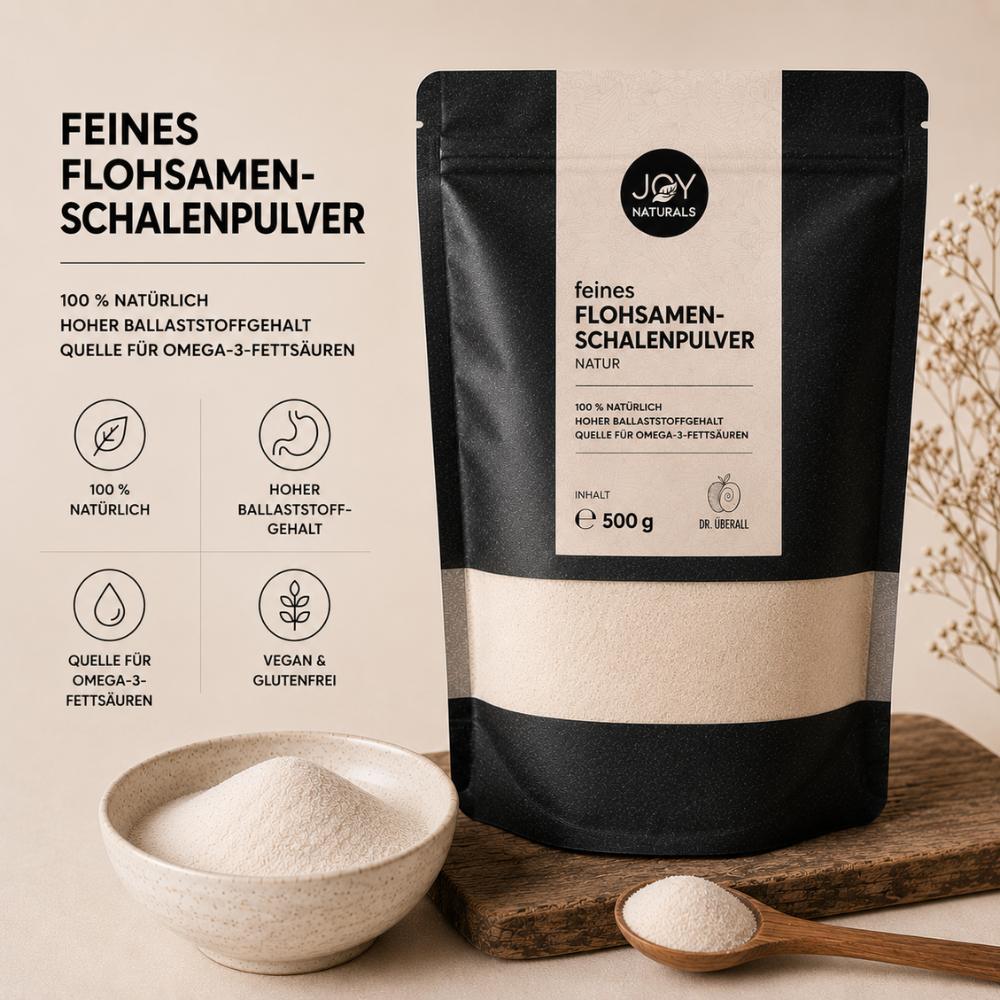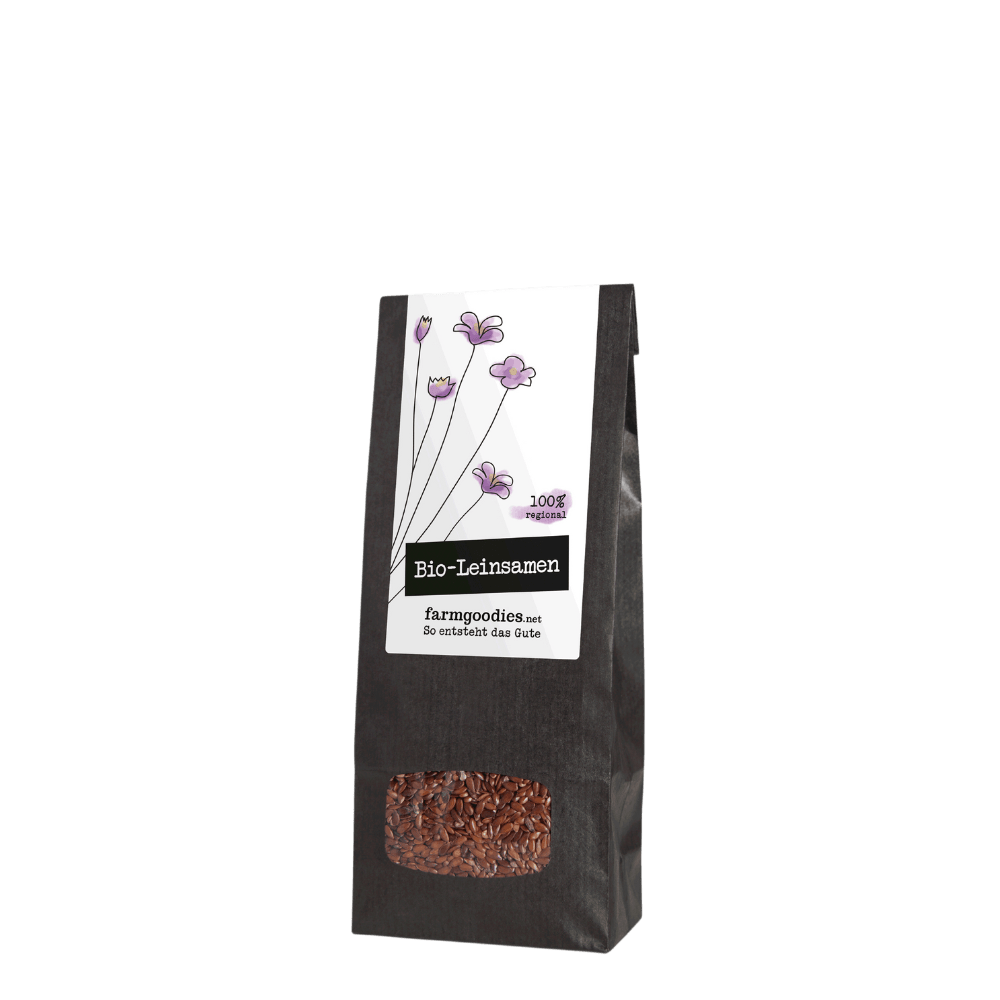

A breakfast that keeps you full for longer, a lighter feeling in your stomach, and digestion that reliably finds its rhythm: It often doesn't start with a complicated plan, but with a spoonful of seeds. When it comes to psyllium husks or flaxseed, there is no single right or wrong answer. Both are valuable plant-based sources of fiber. However, they work in different ways and are therefore suited to different needs.
If you want to consciously design your daily diet, it pays to know the small but crucial difference. After all, a routine works best when it suits your body, your everyday life, and your taste.
Psyllium husks or flaxseed: the most important difference
Psyllium husks consist mainly of soluble, highly absorbent fiber. When they come into contact with liquid, they form a gel-like consistency. It is precisely this property that makes them a popular support for regular digestion and a pleasantly long-lasting feeling of fullness for many people.
Flaxseed also contains fiber, but additionally provides valuable plant-based fatty acids, protein, and secondary plant compounds, including lignans. They are therefore more than a digestive aid: flaxseed also enriches meals nutritionally and with its mild, nutty note.
In short: psyllium husks stand for concentrated absorbency. Flaxseed is a holistic, natural all-rounder. What suits you better depends on what you are looking for right now.
If your digestion needs more regularity
Fiber is food for your gut bacteria and contributes to greater stool volume. The prerequisite is that it is combined with sufficient liquid. Psyllium husks can be particularly practical if you want to increase your fiber intake in a targeted and uncomplicated way. Even a small amount can be stirred into water, smoothies, yogurt alternatives, or porridge without affecting the taste.
Due to their high absorbency, psyllium husks can be interesting both for sluggish digestion and for very soft stools. They bind water in the gut and can thus contribute to a more manageable consistency. This is not an instant effect at the touch of a button: Give your body a few days to get used to the higher fiber content.
Flaxseed promotes digestion mainly through its mixture of soluble and insoluble fiber. The form is important: Ground flaxseed is usually the better choice because the body can make better use of its ingredients. Whole flaxseed, on the other hand, often passes through the body almost intact and is excreted.
For a sensitive stomach, the rule for both is: Start small. Half to one teaspoon daily can be completely sufficient at the beginning. When you feel comfortable, gradually increase the amount.
Liquid is not a minor detail
Anyone using psyllium husks should always take them with plenty of liquid and drink another glass of water afterwards. Without enough liquid, absorbent fiber can, on the contrary, be unpleasant. Drinking also supports the effect of flaxseed and helps the fiber pass well through the digestive tract.
As a simple guideline: Every high-fiber portion should be accompanied by a large glass of water or unsweetened tea. Regularly filled drinking glasses throughout the day are often more helpful than a large amount at once.
For satiety and weight management
If you regularly get a little hungry between breakfast and lunch, both seeds can be a useful addition. Fiber slows down gastric emptying and often makes meals more filling. This can help you eat more consciously without having to give anything up.
Psyllium husks are particularly concentrated here. In a creamy porridge or shake, they provide more volume and a pudding-like texture without significantly altering the original taste. This is a good fit for a busy everyday life, when your breakfast should be quickly prepared and still keep you full for a long time.
Flaxseed additionally offers fat and plant-based protein. This makes it act slightly more wholesome in a meal. It is particularly well suited for overnight oats, Bircher muesli, yogurt alternatives, soups, or homemade bread. Anyone who likes a natural, slightly nutty component will probably prefer to use it regularly rather than taste-neutral psyllium husks.
However, satiety is not created by a single spoonful of superfood. Combine fiber with a protein source, healthy fats, and a varied meal. A protein porridge with berries, ground flaxseed, and some nut butter is, for example, a simple morning ritual for body and soul.
Nutrients: Where flaxseed has the upper hand
Psyllium husks are primarily fiber suppliers. They are not a relevant source of omega-3 fatty acids, protein, or micronutrients. Their strength lies in their functional effect and easy dosing.
Flaxseed, on the other hand, contains alpha-linolenic acid, a plant-based omega-3 fatty acid. It also provides lignans, which belong to the group of phytonutrients, as well as minerals and some protein. For a plant-based diet, they are therefore a nice, versatile ingredient.
This does not mean that flaxseed is automatically the better choice. If you are specifically looking for a high dose of absorbent fiber, psyllium husks are usually more efficient. If you want to enhance your meal with fiber, fatty acids, and a natural nutrient profile at the same time, ground flaxseed is particularly suitable.
How to integrate both into your everyday life
The best routine is the one you also maintain on stressful days. Psyllium husks usually only need a few minutes to thicken after stirring. Add about one teaspoon to a large glass of water, stir quickly, and drink the mixture promptly. Then follow with another glass of water. In porridge or smoothies, you can mix them in directly and adjust the consistency to your taste.
Ground flaxseed tastes excellent in breakfast. One to two tablespoons sprinkled over porridge, muesli, or a salad is an uncomplicated start. They are also suitable as an egg substitute when baking: Mixed with water, a gel-like "flaxseed egg" forms after a few minutes, which binds muffins or pancakes.
Anyone who likes variety does not have to decide strictly. Psyllium husks can be useful on days with increased fiber needs, while flaxseed forms the daily basis in breakfast. What matters is the total amount of fiber throughout the day and how well you tolerate it.
When caution is advisable
If you have swallowing difficulties, known narrowings in the gastrointestinal tract, or acute severe abdominal pain, you should not use absorbent fiber without medical consultation. This applies especially to psyllium husks because they swell very strongly.
If you take medication, it is best to keep a time gap of at least one to two hours for psyllium husks and flaxseed. Fiber can influence the absorption of some medications. In case of chronic illnesses, pregnancy, or if symptoms persist longer, individual advice from a doctor or pharmacy is the safe choice.
Bloating at the beginning is not unusual, especially if you have eaten rather low-fiber until now. A smaller amount, more liquid, and a slow increase are often the more pleasant way than an overly ambitious start.
Your choice can be simple
Reach for psyllium husks if you are looking for a taste-neutral, particularly absorbent source of fiber for digestion and satiety. Choose ground flaxseed if you want to additionally enrich your meals with plant-based omega-3 fatty acids, lignans, and a nutty note.
You do not have to make nutrition a daily science. Listen to your gut feeling, start with small amounts, and make the spoonful in breakfast a routine that really does you good.