Warum plötzlich alle über „Cortisol Detox“ sprechen – und was wirklich dahinter steckt

Why everyone is suddenly talking about “cortisol detox” – and what’s really going on

Some people wake up already exhausted in the morning.
Others feel like they're operating on autopilot during the day: coffee barely works anymore, sleep doesn't provide any real rest, and even minor demands suddenly feel exhausting.

This feeling has now become known on social media as:
"High Cortisol".

Millions are suddenly talking about cortisol detox, stress hormones, belly fat, sleep problems, and nervous exhaustion. But is it really just a new wellness fad – or does this trend point to a much bigger problem with our modern lifestyle?

That's exactly what makes this topic so fascinating right now.

Herbstblues: This is how you recognize the signs and find your balance again You read Why everyone is suddenly talking about “cortisol detox” – and what’s really going on 9 minutes

Cortisol is not the enemy

First, something important:
Cortisol is not a “bad” hormone.

On the contrary.

Cortisol is a vital stress hormone produced by the adrenal glands. It helps the body:

  • wake up in the morning
  • provide energy
  • regulate inflammation
  • react to stress
  • stay productive in the short term

Without cortisol, we could not function.

The problem is not caused by cortisol itself, but by a state in which the body never properly switches off.

And that is exactly what affects an astonishingly large number of people today.

Our body actually lives in a constant cycle of activity and recovery

Biologically speaking, stress is not a bad thing.
The body is designed to respond to challenges.

In the past, stress usually meant:

  • physical activity
  • acute danger
  • short-term stress

This was automatically followed by relaxation.

Today, this mechanism often works very differently.

Modern life no longer produces short bursts of stress, but rather constant background stress:

  • news
  • appointments
  • screen stimuli
  • constant connectivity
  • mental overwhelm
  • sleep deprivation
  • time pressure
  • social stimuli
  • a constant flood of information

The problem:
The body can barely tell the difference between real danger and constant mental stress.

For the nervous system, much of it simply remains:
“stress.”


When stress becomes chronic, the entire bodily experience changes

In the short term, cortisol makes you productive.

In the long term, however, a constantly activated stress system can affect many processes:

  • sleep quality
  • recovery
  • hunger and satiety
  • energy levels
  • concentration
  • mood
  • blood sugar regulation
  • ability to relax

Many people then describe a paradoxical feeling:

  • tired and tense at the same time
  • exhausted, yet internally restless
  • lethargic during the day, suddenly wide awake in the evening

This exact pattern is being discussed more and more frequently today.


Especially insidious: chronic stress eventually starts to feel “normal”

Many people don’t realize for a long time how tense their nervous system already is.

Because chronic stress is often not dramatic.
It is subtle.

You keep functioning:

  • working
  • training
  • getting through everyday life
  • sleeping somehow
  • carrying on

But the body is often permanently in a state of heightened alertness.

And that is exactly why so many people are currently talking about topics such as:

  • nervous system regulation
  • sleep optimization
  • stress resilience
  • adaptogens
  • recovery
  • cortisol balance

Not because cortisol is “bad.”
But because genuine recovery has become rare for many people.


Modern life keeps the nervous system constantly active

Our body is still biologically designed for short-term stress situations:

Danger → activation → recovery.

Today, reality often looks different:

  • constant connectivity
  • screen stimuli late into the night
  • sleep deprivation
  • constant mental stress
  • too little genuine recovery
  • high information overload
  • emotional overwhelm
  • performance pressure and sensory overload at the same time

The body does not distinguish particularly well between:

  • real danger
  • emotional stress
  • sleep deprivation
  • constant notifications
  • mental overload

The result:
The nervous system remains permanently on high alert.

And this is exactly where what many people call a “High Cortisol Lifestyle” begins.


Why the topic is exploding right now in early summer

Interestingly, many people report particularly in spring and early summer:

  • sleep problems
  • exhaustion
  • nervousness
  • water retention
  • energy crashes
  • concentration problems
  • increased cravings

There are several reasons for this.

More light changes the hormonal rhythm

With the longer days, the internal clock changes.

Melatonin (the sleep hormone) and cortisol work closely together.
The body has to hormonally readjust in spring.

If sleep rhythm, stress levels, and recovery are already unstable, this transition can cause additional restlessness.


More activity also means more strain

In summer, many people suddenly want to:

  • exercise more
  • be more active
  • lose weight
  • “get fit”
  • sleep less and experience more

As a result, the body often gets:

  • more training stress
  • less recovery
  • greater metabolic strain

Crash diets and excessive fitness routines can additionally increase cortisol.


Heat and circulatory stress also play a role

Warmer temperatures strain:

  • the circulatory system
  • mineral balance
  • fluid balance
  • sleep quality

This too can activate the stress system more strongly, especially in people who are already exhausted or sensitive to stress.


The typical “High Cortisol” signs

Important:
Not every symptom automatically means “too much cortisol.”

But many people recognize themselves in typical patterns:

Frequently mentioned are:

  • being exhausted in the morning
  • not being able to switch off in the evening
  • sleep problems despite tiredness
  • inner restlessness
  • Brain fog
  • irritability
  • strong tiredness after eating
  • afternoon energy crashes
  • cravings for sugar or coffee
  • belly fat despite exercise
  • constant “need to function”

The problem:
Many then try to achieve even more.

More coffee.
Harder training.
Stricter diet.

But the body often needs the opposite.


What really lies behind the term “Cortisol Detox”

The term sounds dramatic, but biologically it is actually inaccurate.

Because:
Cortisol does not need to be “detoxed.”

The body produces cortisol on purpose.

What it's really about is:

  • regulating the nervous system
  • improving sleep quality
  • promoting recovery
  • reducing stress reactions
  • making energy more stable

That is why many successful approaches seem surprisingly simple.


What can really help the body

1. Sleep suddenly becomes more important than supplements

Social media often looks for the perfect capsule.

But the most powerful lever remains:
real recovery.

Even small changes can help:

  • regular sleep times
  • less screen light in the evening
  • cool sleep environment
  • morning daylight
  • reducing late caffeine

The body regulates stress hormones heavily through the sleep rhythm.


2. Not every body needs harder training

Many people react to prolonged stress with:
“I need to push myself more.”

But intense exertion can be counterproductive in chronic stress.

Often more useful:

  • walks
  • moderate strength training
  • mobility
  • breathing exercises
  • time outdoors
  • lower stimulus load

Especially in early summer, it often shows:
More energy is not always created by “doing more.”

But through better regulation.


3. Blood sugar affects the stress system more than many think

Strong blood sugar fluctuations also mean stress for the body.

Typical triggers:

  • very sweet snacks
  • meals without protein
  • constant snacking
  • large amounts of caffeine on an empty stomach

More stable meals can help keep energy and mood more even.


4. Adaptogens are therefore becoming so popular

A huge trend in the supplement world right now is so-called adaptogens.

These include plants and natural substances such as:

  • Ashwagandha
  • Reishi
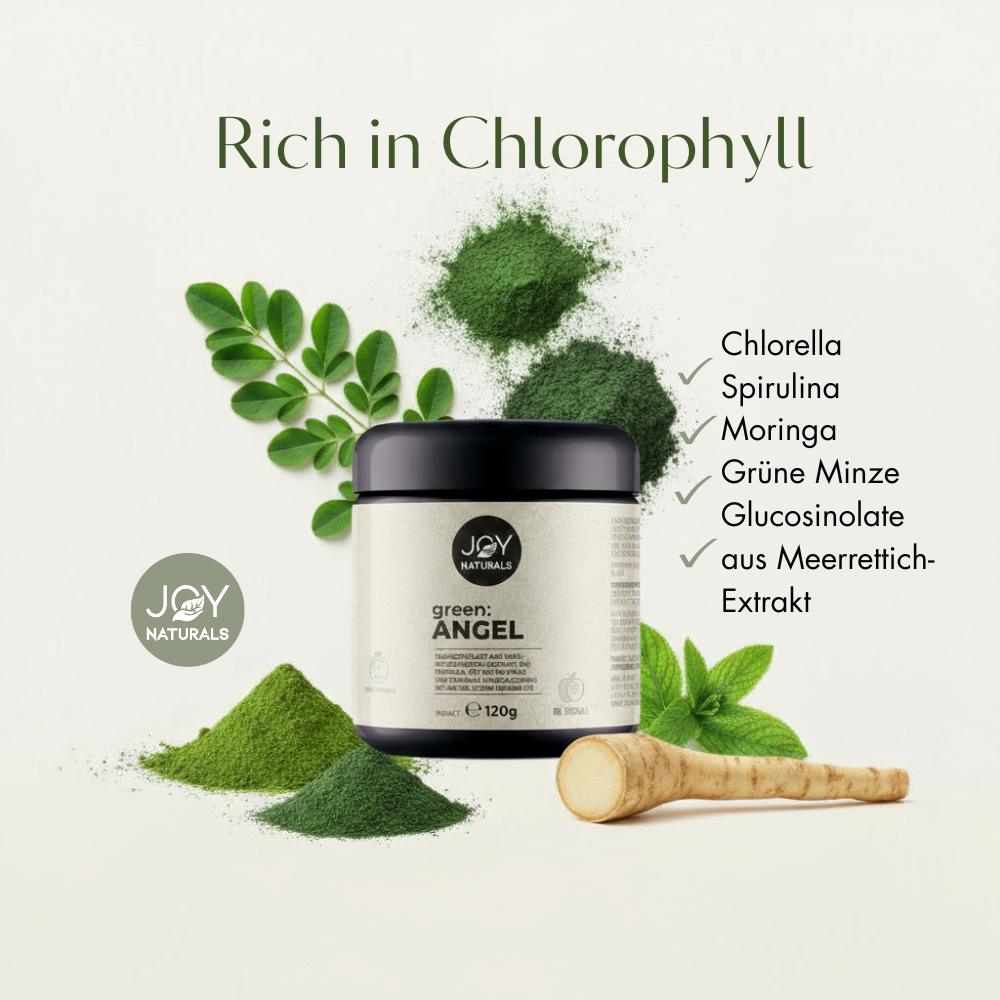
  • Glucosinolates
  • Ginseng
  • Moringa

They are traditionally used to support the body under stress.

Important here:
Adaptogens are not a “miracle cure.”

They do not replace:

  • sleep
  • recovery
  • a healthy routine

But they fit perfectly into the current spirit of the times:
People are looking for ways to feel more balance again.

And maybe that is exactly the real reason why this topic is becoming so big right now:
Many intuitively realize that the body does not permanently work with just more coffee, more performance, and more “pushing.”


The everyday life of many people today consists of constant activation

Coffee in the morning to wake up.
Coffee at noon against the slump.
Another one in the afternoon for concentration and energy.

In the short term, this often works surprisingly well.
In the long term, however, a cycle often arises of:

  • inner restlessness
  • fatigue
  • poorer sleep
  • renewed energy needs the next day

That is why many people are consciously changing small everyday routines right now.

Not radically.
But realistically.


Small rituals instead of perfect self-optimization

This is exactly where simple rituals become interesting.

For example:

  • a short break without a screen
  • an evening walk
  • eating consciously slower
  • morning sunlight
  • breathing exercises
  • Herbal or adaptogen drinks instead of the third or fourth cup of coffee

Not as a “detox miracle.”
But as small signals to the body:
You do not have to stay permanently in alarm mode right now.

That is exactly why many people report that with such routines they feel:

  • more balanced
  • more stable
  • less nervous
  • mentally clearer

feel.


Why warm drinks and conscious routines are suddenly becoming so popular again

What is interesting:
The trend is currently moving away from extreme solutions – towards everyday regulation.

Instead of:

  • even more energy push
  • even stronger stimulants
  • even harder diets

many are increasingly relying on consciously calming routines.

For example:

  • Adaptogen blends in the afternoon
  • Herbal drinks in the evening
  • bitter substances before eating
  • functional plant substances like glucosinolates
  • conscious breaks in the daily routine

Especially warm drinks develop almost a ritualistic effect here:
pause briefly, slow down, reduce stimuli.

And exactly these small interruptions are missing for many people today in everyday life.


Balance is rarely created through extremes

Maybe that is exactly the most exciting thought behind the entire “Cortisol Detox” trend:

The body often does not need more discipline.
Not more optimization.
Not more pressure.

But rather:

  • better recovery
  • more stable routines
  • fewer constant stimuli
  • small reliefs in everyday life

Because sometimes regulation does not begin with a big change.

But simply by allowing the nervous system moments of rest in between.


Why many people feel “burnt out despite everyday life” right now

The perhaps most exciting thing about this trend:

Many affected people objectively do not live an extreme everyday life.

And yet they feel permanently exhausted.

Why?

Because modern stress is often not physical, but neurological.

The body hardly gets real rest anymore:

  • constant stimuli
  • permanent input
  • little silence
  • hardly any recovery phases
  • constant mental activity

The nervous system remains active – even when you actually have a “break.”


The body does not need a detox – but regulation

The hype around “Cortisol Detox” actually shows something bigger:

More and more people realize that their body is permanently running in stress mode.

Not necessarily sick.
But constantly overstimulated.

And exactly for this reason topics like:

  • Nervous system regulation
  • Sleep quality
  • Adaptogens
  • Gut health
  • Minerals
  • Stress management
  • conscious routines

are just so relevant.

Maybe it is therefore not at all about “fighting” cortisol.

But rather creating conditions, under which the body can even downregulate.

And exactly that seems to have become the real challenge for many today.

Contact us