
Why Diets Fail – and What Supports Your Body.
Sound familiar?
You start a new diet. This time, everything is going to be different. You're motivated, you buy "healthy" groceries, cut out sweets, reduce carbs, eat smaller portions, and stick to strict rules.
The first few days go well.
But then comes that moment:
You're tired. Stressed. Your day has been long. Your body craves quick energy. And suddenly it's back – that intense craving that willpower alone can barely stand up to.
Many people then believe:
"I just don't have enough discipline."
But that's usually not true.
The problem isn't your willpower.
The problem is often that your body isn't being properly nourished.
Especially as you get older, a lot changes. Your metabolism often doesn't work quite as "forgivingly" as it did in your early twenties. Muscle mass becomes more important, stress has a greater impact on eating habits and energy levels, and sharply fluctuating blood sugar can more quickly lead to fatigue, cravings, and constant snacking.
That's why radical diets so rarely work in the long term.
Why Classic Diets Are More Likely to Stress Your Body
Many diets rely on deprivation.
- Eat less.
- Control more.
- Count calories.
- Cut out certain foods completely.
In the short term, this can work. But in the long term, a cycle often develops:
- You eat too little.
- Your body gets too little energy and nutrients.
- You get hungrier.
- Your craving for sweets or quick carbohydrates increases.
- Eventually, you give in.
- Then you feel bad – and start all over again.
This is exactly what often creates the well-known yo-yo effect.
Because your body isn't designed to function in a state of deficiency long-term. If you give it too little, it won't become "tamer" – it will get louder. Hunger is not a sign of weakness. Hunger is a biological signal.
And the more you ignore this signal, the stronger it can come back.
The real question isn't: "How do I eat less?"
Many people ask themselves the wrong question when trying to lose weight.
They ask:
"How can I eat as little as possible?"
But it would be much more useful to ask:
"What can I eat so that my body stays full, stable, and well-nourished for a long time?"
Because when you're full, you need less discipline.
When your blood sugar remains stable, you have fewer cravings.
When your body gets enough protein, healthy fats, and fiber, it becomes much easier for you to automatically make better decisions.
So weight loss doesn't start with hunger.
It starts with true satiety.
Why a Balanced Protein Intake Keeps You Full Longer
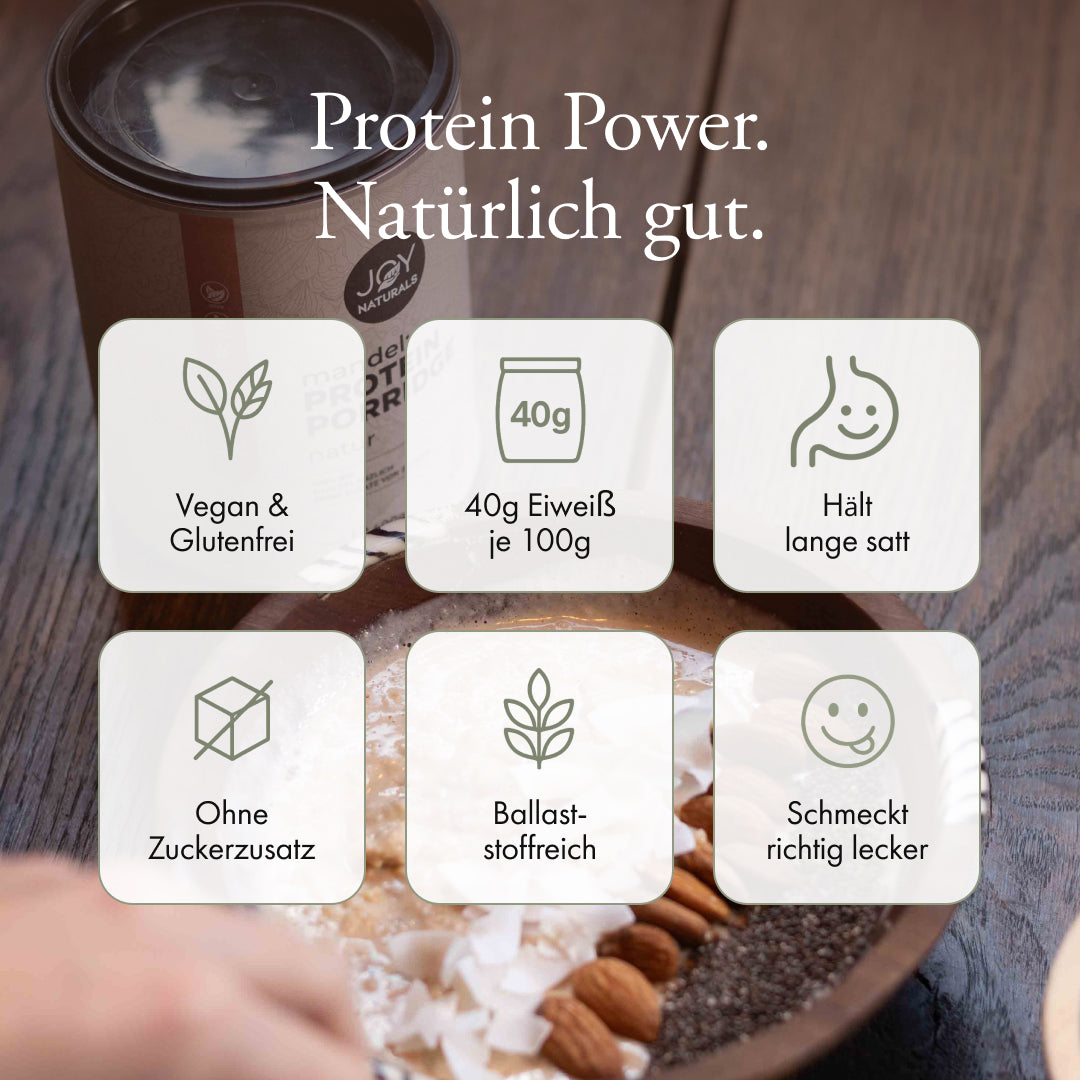
Protein is one of the most important nutrients if you want to maintain or reduce your weight.
The reason: Protein is particularly satiating.
This is partly because protein-rich meals support the release of satiety hormones. So your body gets not only calories, but also a clear signal:
"I'm nourished."
Your body also needs more energy to digest and process protein than many other nutrients. This is called the thermic effect of food. Simply put: Your body has more "work" to do with protein – and that helps you feel full longer.
Another important point: Protein helps maintain muscle mass. And this becomes increasingly important from age 30 onward. Muscles are metabolically active tissue. The more muscle mass you maintain, the better you support your basal metabolic rate.
So protein isn't just for athletes.
Protein is a real key to satiety, energy, and body composition.
Why Healthy Fats Are Important
Fats have long been unfairly demonized.
Of course, it makes a difference which fats you eat. Highly processed fats from fast food or fried products are not the same as natural fats from nuts, seeds, or almonds.
Healthy fats have a major advantage:
They slow down digestion and ensure that energy is released more evenly .
This means: You won't be hungry again after a short time.
Your body gets energy for longer.
And your breakfast feels not only "light," but also truly satisfying.
Almonds provide exactly these kinds of valuable fats. In addition, they bring plant-based protein, fiber, and important micronutrients. This makes them much more than just a small ingredient – they make a meal more complete, more filling, and more balanced.
Why Fiber Is Your Secret Weight-Loss Helper
Fiber is often underestimated.
Yet it plays a huge role in satiety, digestion, and blood sugar.
Fiber swells in the digestive tract and slows the absorption of sugar from food. This prevents your blood sugar from spiking as rapidly – and also from dropping as sharply afterward.
That is exactly what is crucial.
Because while a rapid blood sugar spike feels good in the short term, it often leads to an energy crash later. And this energy crash can trigger cravings.
Fiber therefore helps to break this cycle.
It ensures that you feel full longer, supports your digestion, and helps natural sweetness fit better into a balanced meal.
Why Natural Sweetness Should Be Better Paired
Many people immediately think about weight loss:
"Then I can't eat anything sweet anymore."
But that is also too extreme a way of thinking.
The deciding factor is not just whether something tastes sweet. The deciding factor is what that sweetness is paired with.
A sweet drink or a highly sugared snack often delivers sugar very quickly and without any significant satiety. Your body gets energy, but hardly any protein, hardly any fiber, and hardly any healthy fats.
The result: a short-lived pleasure, followed often by hunger again.
Dates are naturally sweet, but unlike refined sugar, they also bring fiber and natural plant compounds. They become particularly useful when they are not eaten on their own, but together with protein, almonds and high-fiber ingredients.
This creates a more balanced meal rather than empty sweetness.
The Breakfast Trap: Why Many Start Off Wrong in the Morning
A major trap lurks especially at breakfast.
Many classic breakfast products seem healthy, but are often very high in carbohydrates and not very filling. They deliver quick energy, but hardly any protein and hardly any healthy fats.
This can lead to you feeling hungry again just two hours later.
Maybe you know this:
- You eat something sweet or very light for breakfast.
- Shortly afterward, you feel full of energy.
- Then comes the crash.
- You need coffee.
- Then something sweet.
- Then a snack.
- And suddenly, the hunger carries through the whole day.
This has nothing to do with a lack of self-control.
It is often simply a consequence of your breakfast not having truly nourished you.
What Your Body Really Needs
It is worth looking at nutrition not just in terms of calories anymore.
Of course, calories play a role. But they are not the whole story.
The quality of your meals becomes more important:
- Are you getting enough protein?
- Are healthy fats included?
- Do you have enough fiber?
- Does your blood sugar remain stable?
- Does the meal really make you full?
Because if your breakfast consists of quickly available carbohydrates, you might not have eaten that many calories in terms of pure calculation – but still not feel full for long.
A good meal should not just "fill" you.
It should nourish you.
The Better Way: Satiety Instead of Deprivation
The key is not to forbid everything.
The key is to structure your meals so that your body gets what it needs.
Ideally, a filling meal contains:
Protein – for long-lasting satiety and muscle maintenance
healthy fats – for stable energy and flavor
Fiber – for digestion and blood sugar balance
natural sweetness – for enjoyment without empty calories
This combination is so effective because it fulfills several needs at once.
You are full.
You have energy.
You have enjoyment.
And you don't have to constantly fight cravings.